


Pick Your Meal
Choose a carb-heavy meal you eat regularly — pasta, pizza, rice, or bread. This will be your test meal for both days.

These statements have not been evaluated by the Food and Drug Administration. This product is not intended to diagnose, treat, cure, or prevent any disease.


A physician-formulated, honey-smooth pre-meal primer in portable 50 cc squeeze pouches. Take 10–15 minutes before your two largest meals as part of your daily routine.

A velvety vanilla-caramel honey-gel that goes down in seconds. Because it is pre-hydrated, you only need an optional sip of water to clear your palate. No forced fluid loading, zero clumping, and no cutting out foods you love.*
Building and maintaining healthy eating habits can take time. Busy schedules, changing routines, food preferences, and everyday demands may make consistency challenging.
A sustainable approach can focus on habits that fit your life, such as choosing balanced meals and making gradual changes you can maintain over time.
There is no single approach that works for everyone. Consider your individual needs and seek guidance from a qualified healthcare professional when appropriate.
Traditional Fiber Powders: Force you to choke down 16–32 oz of gritty sludge before it turns to cement—often causing gas and bloating.
Fiber Capsules: Demand swallowing 4–6 horse pills with heavy fluids.
Restrictive Diets: Force you to cut food groups and starve through dinners.
The Gliveta Advantage: A velvety vanilla-caramel honey-gel that goes down in seconds. Because it is pre-hydrated, you only need an optional sip of water to clear your palate. No forced fluid loading, zero clumping, and no cutting out foods you love.*
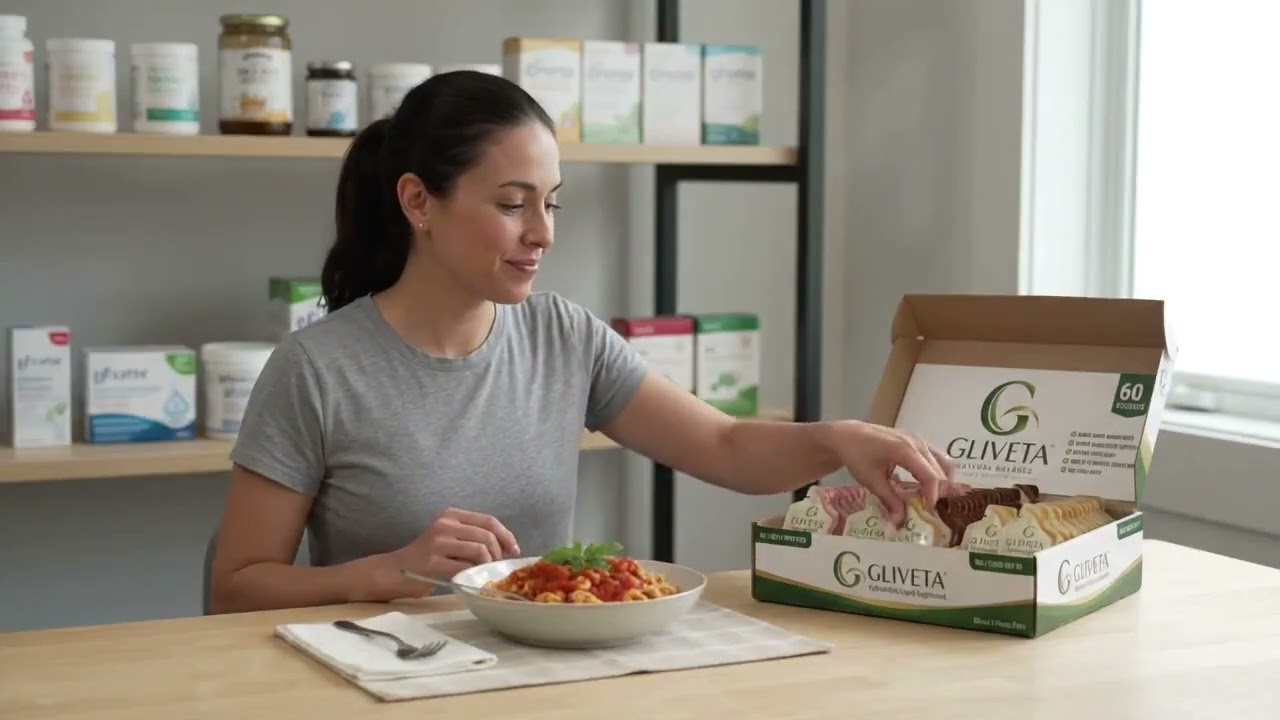
▶ Watch the Gliveta Challenge

Who this challenge is for: Adults whose blood sugar levels are already in the normal range. This challenge is not intended for individuals with diabetes or prediabetes. This is a personal wellness observation exercise, not a diagnostic test or a way to evaluate treatment. Individual results vary. Do not change prescribed medication or medical care based on this challenge. If you are unsure whether this challenge is appropriate for you, consult a qualified healthcare professional before participating. Two days. Same everything. See for yourself.
Choose a carb-heavy meal you eat regularly — pasta, pizza, rice, or bread. This will be your test meal for both days.
Eat your meal at your normal time. Don’t take Gliveta. Wear your CGM and track your blood sugar response throughout the meal.
Eat the exact same meal, at the same time, in the same quantity. But this time, take Gliveta Primer 10–15 minutes before you eat, with a small sip of water. Track your CGM again.
Look at your two CGM readings side by side. See what changed when Gliveta was part of your meal.
Ingredient transparency
A plant-derived, non-digestible cellulose fiber used as a bulk-forming agent. It absorbs water and adds viscosity, so it may support stool bulk and fullness; individual results vary.
Cellulose is found in the cell walls of plants, including vegetables, fruits, legumes, and whole grains. Commercial methylcellulose is made by modifying purified cellulose.
McRorie JW Jr. Understanding the Physics of Functional Fibers in the Gastrointestinal Tract. Nutrition Today, 2015. Methylcellulose: MedlinePlus Drug Information, U.S. National Library of Medicine.
View scientific reference ↗
In medicine, methylcellulose is used as a bulk-forming laxative; follow product directions and take with adequate fluid. In food, it functions as a thickener, stabilizer, binder, and emulsifier, including in plant-based formulations.
Explore external source ↗
A polysaccharide derived from brown seaweed. It forms a viscous gel in water and can create a raft barrier, which is why alginate-based formulations are studied and used for reflux symptom management.
Kelp and other brown seaweeds, including Laminaria and Macrocystis species, are natural sources of alginate.
Leiman DA, Riff BP, Morgan S, et al. Alginate therapy is effective treatment for GERD symptoms: a systematic review and meta-analysis. Diseases of the Esophagus, 2017. Brown seaweed alginate structure and applications literature.
View scientific reference ↗
In medicine, alginate is used in some antacid and reflux products, including raft-forming formulations such as Gaviscon; it is not a substitute for medical evaluation. In culinary applications, it thickens liquids and enables calcium-based spherification.
Explore external source ↗
A soluble, gel-forming dietary fiber naturally present in plant cell walls. Pectin can increase viscosity in the gut and may help moderate the rate at which carbohydrates are digested and absorbed.
Especially rich sources include apple skins and pomace, citrus peels, berries, and other fruits. Commercial pectin is commonly extracted from citrus peel or apple by-products.
Brown L, Rosner B, Willett WW, Sacks FM. Cholesterol-lowering effects of dietary fiber: a meta-analysis. The American Journal of Clinical Nutrition, 1999. Pectin and postprandial glycemia research.
View scientific reference ↗
In nutrition research, soluble fibers such as pectin have been studied for effects on cholesterol and post-meal glucose response; results depend on dose and overall diet. In cooking, pectin is widely used to gel jams, jellies, preserves, and fruit preparations.
Explore external source ↗
A rare monosaccharide with a sweetness similar to sugar but substantially fewer calories. Human studies generally report minimal effects on blood glucose compared with sucrose, although responses can vary and larger amounts may cause gastrointestinal discomfort.
Small amounts occur naturally in figs, raisins, kiwifruit, and wheat. Commercial allulose is typically produced from fructose through enzymatic conversion.
Iida T, Hayashi N, Yamada T, et al. Failure of d-allulose to metabolize to energy in humans. Metabolism, 1986. Allulose and postprandial glucose systematic review literature.
View scientific reference ↗
In nutrition, allulose is used as a lower-calorie sugar alternative with a generally small glycemic effect compared with sucrose; it is not intended to treat diabetes. In cooking, it sweetens beverages and baked goods and can help with browning and texture.
Explore external source ↗